
Control & Restraint Training for Real World Self Defense
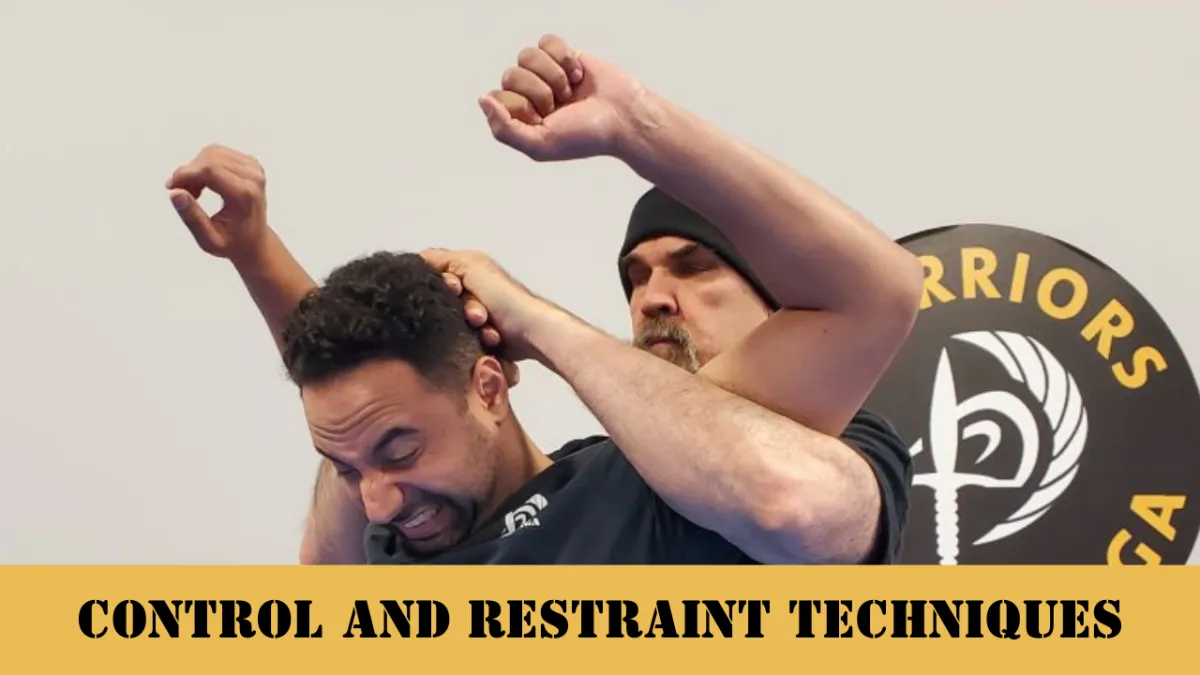
Learn How Professionals Control Aggressive Subjects Without Crossing Legal Or Ethical Lines
How To Use Your Martial Arts Training
Without Getting Convicted
If you're like most martial artists, you started training to learn how to defend yourself.
That matters, but it's only half the problem.
Because in reality, there are TWO fights you have to win.
Fight #1: The actual physical fight,
• An assault.
• A road rage incident.
• A home invasion.
• A sexual assault.
• Any situation where force may be justified in the moment.
Fight #2: The legal fight that follows.
• The investigation.
• The charges.
• The courtroom.
• The legal fees.
• The civil trial after the criminal one.
This is the part most martial arts schools never teach.
And it's the part that decides whether you go home or lose everything.
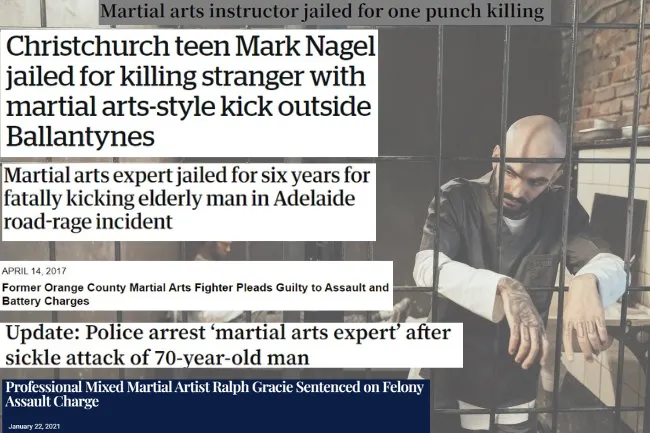
Many skilled martial artists have been convicted, not because they started the fight, but because they couldn't legally justify how they finished it.
When that happens, the cost isn't theoretical.
• It's prison time,
• Financial ruin,
• Destroyed careers,
• And families left behind.
As renowned self-defense attorney Andrew Braca explains:
"You learn martial arts to make yourself harder to kill, but you must also understand the law to make yourself harder to convict."
If you're unaware of one of the most infamous of these stories, read the case study below about the martial artist sentenced to seventeen years after a fatal altercation with a bouncer.

Better Than The CIA's Training
I am writing to express my highest recommendation for Nick Hughes as an instructor.
The training I received at the CIA was comprehensive, but Nick's teachings transcend those experiences in both depth and application.
What truly sets him apart is his innate ability to teach. Finding a skilled fighter who is also an exceptional teacher is rare, and Nick embodies this combination perfectly.
Lochlan A
Chief of Intelligence Operations
When Martial Arts Training Ends In A Prison Sentence
In a widely cited New York case, martial artist Isaias Umali, then 31, was sentenced to seventeen years in prison following a fatal altercation at a nightclub in Queens.
Umali was a student of the martial art Kali, an art famous for its blade training.
The incident began when bouncer Dana Blake attempted to enforce New York’s indoor smoking ban by asking a patron to leave the Guernica nightclub for smoking indoors.
A confrontation followed involving multiple people.
During the melee, Umali used a knife technique he had learned in training, stabbing Blake in the groin and severing the femoral artery. Blake later died from the injury.
After the incident, Umali fled the scene and was later arrested. The case ultimately resulted in a conviction and a lengthy prison sentence.
The outcome didn't hinge on martial arts skills.
It hinged on how force was applied, whether the level of force was legally justified, and whether the response could have been defended in court.
The tragedy is not only that a man lost his life, but that a trained martial artist lost his freedom, future, and family because he was never taught the legal ramifications of the moves he learned. Nor was he taught to default to less-lethal control and restraint options as we teach here.
Highly Recommended
Within self-protection, the ability to control and restrain an individual is an essential component.
Whether subduing a drunk family member or a police officer restraining a non-compliant offender, such skills should be part of our skillset, but sadly, are widely lacking.
It doesn't have to be like this. Good training exists, and none is better than the program by Nick Hughes.
The material, while being comprehensive, is very methodically presented, and the format allows the student to learn at their own pace.

Dennis Martin, CQB Services
Author of "Working With Warriors"
The Skill Most Martial Artists Never Learn
What's missing?
The ability to control and restrain someone without hitting them.
In real self-defense, the issue isn’t just whether force is justified.
It’s whether the level of force you used can be legally defended after the fact.
Across most jurisdictions, the standard is not “use whatever works.”
It’s "Use only enough force that is reasonable and proportionate to the threat."
This is where many martial artists get into trouble.
• Punching,
• Kicking,
• Elbowing,
• And knee strikes are high-impact force options.
Once you use them, you’ve escalated the encounter, whether you intended to or not.
But, the majority of situations begin as:
• Arguments
• Confrontations,
• Drunken Agression
• Low-level physical threats
In situations like these, the expectation is often that control or restraint is attempted before strikes, when it is reasonably possible to do so.
Law enforcement has long taught this concept through models commonly referred to as a use-of-force continuum.
While terminology varies by agency, the principle remains the same:
The level of force you use must match the level of resistance or aggression you’re facing.
Get that wrong, and the consequences aren’t theoretical.
They’re arrests, charges, trials, convictions, and ultimately prison sentences.
When Extreme Violence Isn't The Right Answer
What do you do at family gatherings, social events, parties, or the office Christmas celebration when someone's had too much to drink and gets out of hand?
This isn’t a rare scenario.
It’s one of the most common ways otherwise law-abiding people end up being arrested.
In fact, major holidays consistently see spikes in domestic disturbance and assault calls.
Alcohol, emotions, and confined spaces are a bad mix.
And this is where poor decisions ruin lives.
If a relative, friend, or coworker gets physical and you respond with punches or kicks, you’ve just escalated the situation.
That choice can lead to arrest, criminal charges, legal fees, and consequences that last far longer than the event itself.
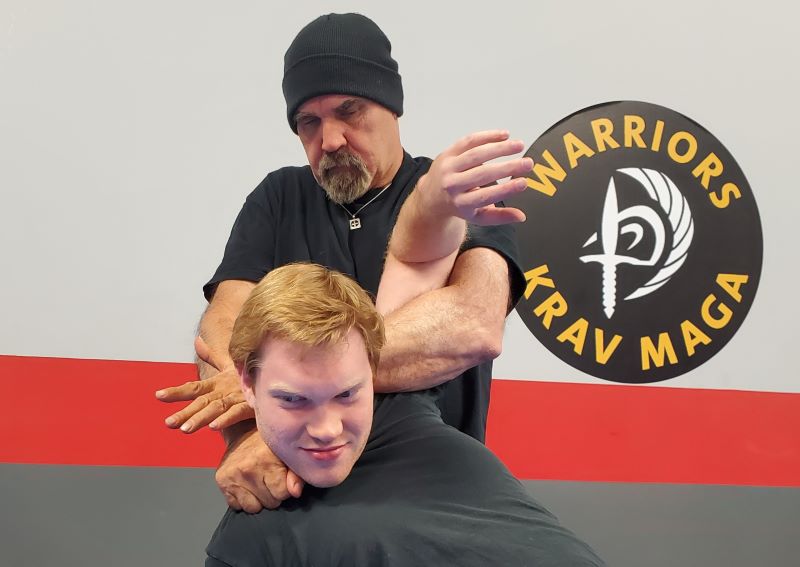
Control and restraint techniques offer another option.
Instead of escalating the violence, you can safely immobilize someone, separate them from others, and de-escalate the situation.
The problem gets resolved without turning a bad night into a criminal case.
The same principle applies in professional settings.
If a coworker shoves you and you respond with strikes, the outcome is predictable:
• Termination
• Charges
• Long-term damage to your career.
Responding with controlled restraint dramatically changes how the incident is viewed by witnesses, employers, and law enforcement.
It doesn’t have to end badly, especially if you have the skill set to manage it correctly.

Cam Quinn: Author of "The Budo Karate of Mas Oyama"
Kyokushin 7th Degree & BJJ Black Belt
Anyone Teaching Self-Defense Should Also Be Teaching This
I highly recommend this Control and Restraint Program to all, including anyone actually in a position to teach self-defense.
It stands out for its practicality, realism, and alignment with legal considerations. It is an invaluable investment for anyone seeking genuine and effective protection strategies.
Hughes’s explanation of, and emphasis on, the crucial concept of Force Continuum ensures a clear understanding of the nature of escalating threats.
The course provides valuable insights concerning the levels of force appropriate in various situations.
The legal ramifications of what we learn are often minimized or completely ignored in self-defense courses.
Nick successfully integrates appropriate, functional, skill-based training with the psychological aspects of threat assessment and effective communication in high-stress, potentially dangerous situations.
The Skill That Changes The Outcome
When you know how to control and restrain someone, you gain options that most martial artists don't have.
Instead of escalating a situation with strikes, you can manage the person, control the situation, and resolve the conflict without excessive force.
And that changes everything.
When you can effectively control and restrain someone, you dramatically reduce the chances of ever hearing phrases like:
• "Turn around and put your hands behind your back."
• "You're Under Arrest."
• "You Have The Right To Remain Silent."
• "How Do You Plead?"
• "We, The Jury, Find The Defendant Guilty."
• "I hereby sentence you to a prison not to exceed...."
Control and restraint techniques don't just manage the physical encounter.
They also influence how the incident is viewed by witnesses, employers, police, prosecutors, and juries
The difference is often the line between:
• A bad night that ends
• A legal process that does not.
Inside The Control & Restraint Training
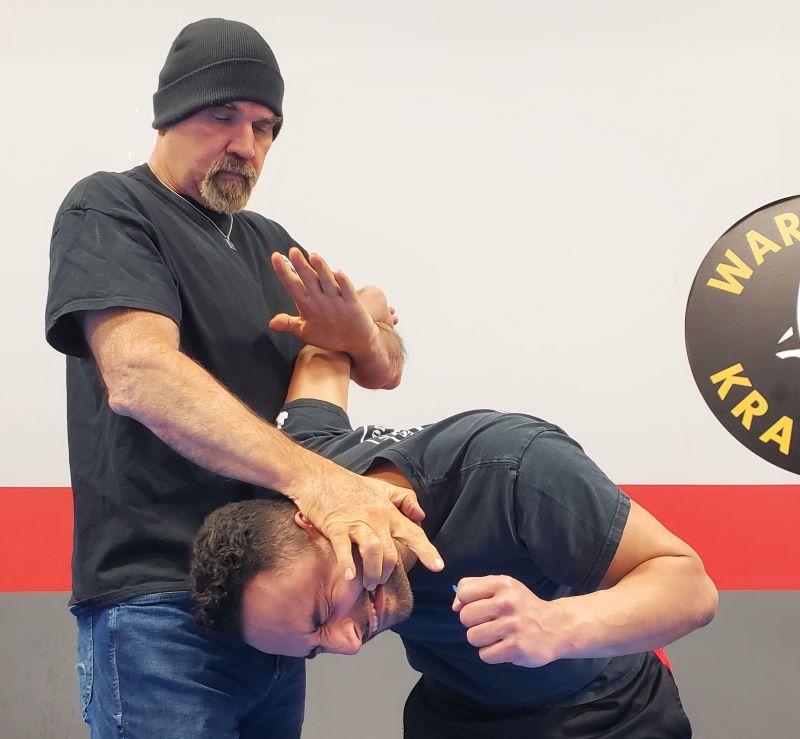
Inside Warriors Krav Maga's Control and Restraint training, you're going to develop the skills to control aggressive individuals safely, effectively, and in ways that stand up to legal scrutiny.
Chief Instructor Nick Hughes began using these techniques way before he ever taught them. First as a bouncer in the city's roughest nightclub when he was only 16, and later as a military police officer in what is arguably France's most dangerous city.
After going through this self-paced, online course, you will know
Over 50 Proven Techniques That Worked Against All Comers
The Limitations of Control & Restraint
Approach Zones that offer the best protection
C&R from the front, the back, and that take people down
Details that only someone who's used these in the real world would know
Techniques that involve no touch at all (no woo-woo here)
Defensive control and restraint
Bonus law enforcement techniques for the 2 toughest problems cops deal with
Bonus modular section that you can use to train a security team
A chance to interact via Zoom to get your questions answered
Lifetime access to the training
If you want to reduce your chances of ever hearing "You're under arrest," this training is for you.
If you're an instructor looking for a practical and powerful module to add to your curriculum that will help keep your students out of prison, then this is for you.
Worth Every Penny
Effective self-defense means not only that you win the fight but that you get to go home, kiss your wife, and hug your kids. The smash-em-up, gouge-the-eyes, rip-the-groin approach may win you the fight, but could easily land you in prison.
Nick Hughes has nailed it with this course on what is undoubtedly the missing link in self-defense training.
Being able to subdue an aggressive opponent without damaging them is not only a legal requirement but actually represents the highest skill level and the highest moral calling of all martial arts.
Gavin Mulholland: Chief Instructor DKK Karate
Author of "Four Shades of Black"
Can I Really Learn From A Video?
Yes. Harvard and Stanford do it, and so does the National Association of Sport Medicine. Google the Barefoot Burglar, and you'll learn about a kid who stole an aircraft after learning how to fly from Microsoft's Flight Simulator.
PS: I learned how to build this website and launch the course all from watching videos.
How Does It Work?
Simple. Hit the enroll button, fill out the info, and you’ll be underway moments later.
The videos at Warriors Krav Maga Online are clear and taught exactly the way we’d teach you if you were here in class, face-to-face with us.
They go into just the right amount of detail for you to grasp exactly what you need. Not only do we go over how to do a technique, but we also cover why and when to do it.
You grab someone to train with and get going.
Do I Need Any Special Equipment?
Not for this module.
A mat might be nice for the takedown section, but I started learning Judo on a wooden floor, and all my karate training was done on wood.
An alternative to a mat would be outside on grass or in sand.
Other than that, just some comfortable clothes to move in.
Do I Have To Complete The Program In A Specific Timeframe?
Absolutely not. That’s one of the benefits of choosing to learn online. You can progress at your own pace, just like our live students do.
It's also yours for life, so take all the time in the world.
Is This Only For Martial Artists Or Security Professionals?
No, not at all. Anyone can benefit from knowing these proven techniques. The law is clear. You must use the minimum amount of force to resolve a situation, or risk being sued or imprisoned.
Resorting to striking techniques is not the minimum when someone could successfully be restrained by control techniques.
What If I'm Not Physically Strong?
I was using these techniques when I began bouncing at age 16. They work either through leverage, pain compliance, or disrupting someone's balance.
Obviously, there are going to be some limitations. No five-foot-tall girl is going to be putting one of these on a 6'5, 300-pound aggressive behemoth. Of course, legally, she wouldn't be expected to.
That's the beauty of them. If you could reasonably be expected to use them, taking into account force disparity, then you have them available in your toolbox.
Is This Legal In My State/Country?
Laws vary from State to State and country to country. What I found in my career that took me around the world, is that no matter where you are, using the least amount of force is going to be your best option.
Will This Work If I'm Being Attacked?
Yes. When I was bouncing and working as an MP, I used them many times both offensively and defensively.
What If I Don't Like It?
You've got a 30-day money-back guarantee. I'm pretty confident you won't need it, though. Number one, I don't find many thieves attracted to my stuff. Most people have integrity, so they're not the sort to buy it, steal it, and then ask for their money back.
Secondly, it's been out a long time, as has my other material, and I've never had anyone request a refund.
The Cheapest Legal Insurance You'll Ever Buy
This course isn’t an expense.
It’s risk insurance.
The skills you learn here are designed to protect the things that matter most:
• Your freedom
• Your career
• Your finances
• Your future.
If this training helps you make the right decision once,
• In one heated moment,
• One alcohol-fueled confrontation,
• One workplace incident
It has paid for itself many times over.
My commitment is simple:
You won’t just learn techniques.
You’ll gain judgment, options, and restraint needed to handle difficult situations in ways that hold up both on the street and in court.
Because The Cost Of A Mistake Is Measured In Years
Because the cost of getting it wrong is measured in years, not dollars.
An assault charge, especially one involving claims of excessive force, can result in arrest, prosecution, legal fees, and a permanent criminal record.
Even relatively minor charges can often require legal defense that quickly runs into five figures, before a case ever reaches trial.
More serious allegations escalate far beyond that.
Against that backdrop, the cost of this training is insignificant.
For less than the price of a single consultation with a criminal defense attorney, you gain skills designed to help you:
• Make better force decisions under pressure
• De-escalate situations without strikes
• Avoid creating a case that needs defending in the first place
This course isn’t about learning more techniques.
It’s about reducing legal exposure.
That’s why this training isn’t an expense.
It’s insurance.
Only $97
Try the entire course for 30 days. If you don't feel more confident managing a physical confrontation without landing yourself in legal trouble, I'll refund every cent. No questions, no hassle.

Important Information
DISCLAIMER: Neither Nick Hughes nor "Warriors Krav Online" promise any specific results as a result of purchasing this course. You have to do the work, and any results or testimonials on this page are not intended to imply any specific gains.
You understand that by practicing this material, there is always a risk of injury and/or death.
PRIVACY POLICY: We may occasionally track your web activity on our pages and send you emails related to the course material. In all such instances, your private data is kept strictly confidential, and you can unsubscribe from the emails if you so wish. (with the exception of transactional emails necessary to fulfill our obligations)
TERMS & CONDITIONS: Short version. You have 30 days, beginning the day your payment is received, to preview the material before your refund period expires. Requesting a refund after the 30-day period will result in your request being denied.
All refunds are discretionary as and when permitted by law. If we believe you have purchased the course, downloaded the material with the intent of distributing it elsewhere or for the purpose of teaching it, and then you ask for a refund, chances are pretty good we'll deny your claim. For more information, click on the links below.
PS: We're not dicks. We spent years learning and mastering this stuff, and we provide value, so don't you be a dick, either. Fair enough