Why We Added Kali In Lake Norman
*For The Uninitiated, That's Filipino Martial Arts
Page Synopsis
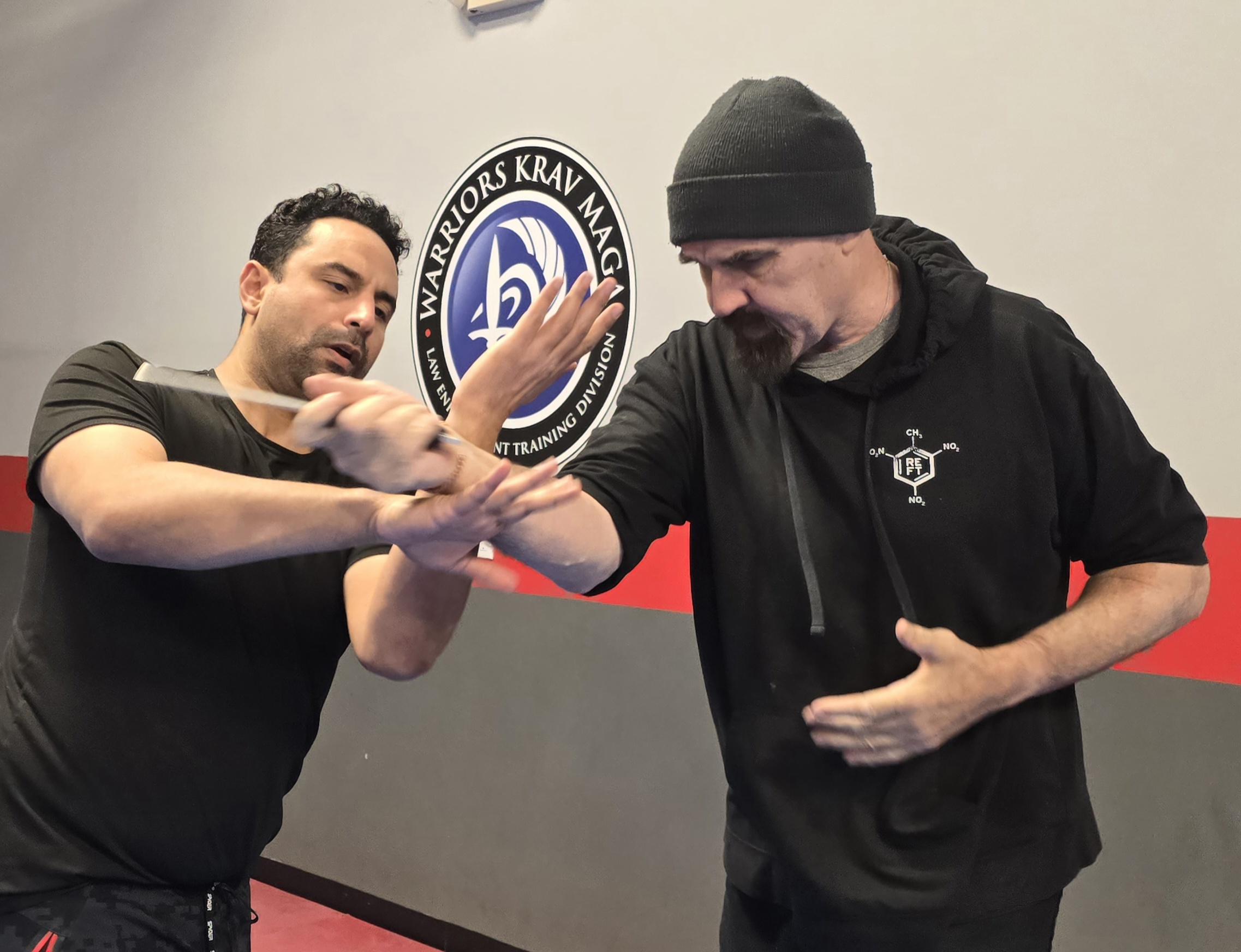
We've added Filipino Kali to our Lake Norman program because real-world violence often involves weapons. Kali focuses on stick and knife awareness, distance management and reflexes that traditional martial arts frequently ignore.
If you're looking for serious self-defense training in Cornelius, Huntersville, Davidson, Denver or Mooresville this article will explain why Kali matters.
The Only Kali Training In Huntersville, Cornelius,
Davidson, and Denver
Until now, there haven't been any dedicated Filipino Kali classes serving Huntersville, Cornelius, Davidson, or Denver, NC.
Students looking for this eclectic training had to travel outside the region, and even there, the choices were limited.
That's just one of the reasons we've decided to add a dedicated Kali class to our self-defense curriculum.
If you live in the Lake Norman area, now you have the option to study edged weapons, stick work, and the combinations of both in what is arguably one of the most effective self-defense systems in the martial arts world.
Most martial art schools in the Lake Norman area focus on Tae Kwan Do, BJJ, or MMA. Very few address the reality that many violent encounters nowadays involve weapons
Kali is one of the names given to Filipino Martial Arts. It's built around the use of weapons and focuses on impact weapons (batons), edged weapons (knives and bolos), and various combinations of both.
Unlike traditional martial arts that treat weapons as advanced or optional training, Kali trains weapons from day one. Their attitude is, "If that's what you're going to end up fighting with, you should start training it immediately."
What Is Kali Exactly?
Kali, often referred to as "Eskrima" and sometimes "Arnis de Mano," falls under the blanket acronym FMA, which stands for "Filipino Martial Arts."
It's a combat system developed in the Philippines and pressure-tested through real conflict, not tournaments.
As mentioned above, they believe in beginning with the weapon first. This makes sense given they're a weapons-based culture, like about eighty percent of the rest of the world is.
That matters because the use of weapons is what puts us at the top of the food chain. Weapons are equalizers giving smaller, less physically capable individuals the ability to defend themselves against a physically stronger opponent and/or a numerically superior group of bad guys.
As a martial artist with over fifty years of training and tons of experience bouncing in violent clubs, I've always maintained that someone with 3 weeks of knife training is going to beat someone with 3 years of karate training. That's not just a theory. It's borne out by the statistical evidence.
The stick in Kali is actually rattan and used to replace a machete, so they could practice sword fighting without cutting one another. It's not, for the most part, impact weapon training at all.
Practitioners learn single stick, double stick, stick and dagger, and dagger. Occasionally, you'll also see some schools training with flexible weapons like whips, but for the most part, it's what you see above, coupled with some empty-hand training as well.
Flow Drills And Reflex Development:
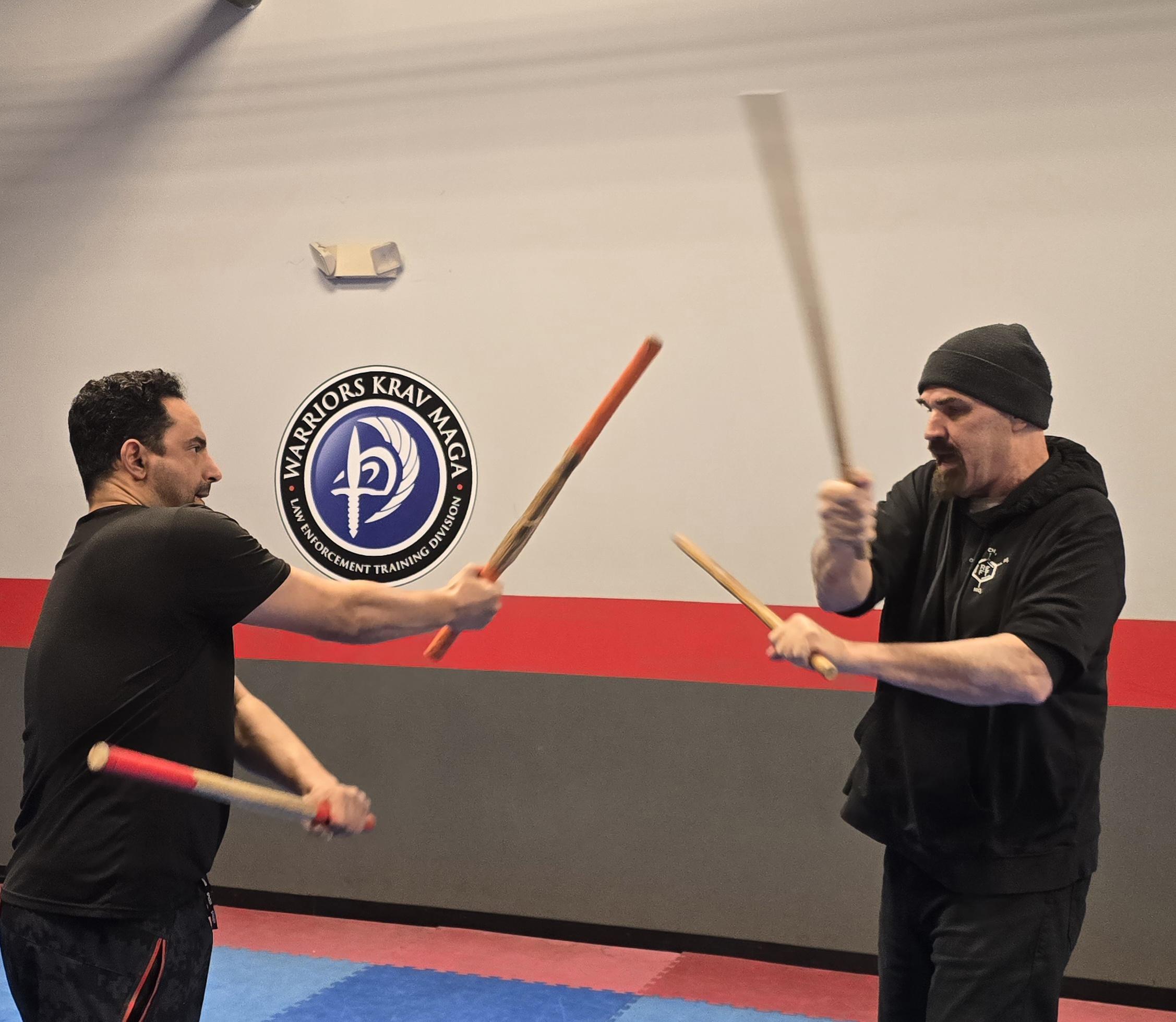
One of the defining characteristics of Kali is its use of flow drills. These are continuous partner drills that train recognition, reaction development, and counterattacks in real time.
Rather than performing static, one-step drills where the attack is pre-ordained, Kali develops fluid exchanges. You learn to read movement, adjust instantly, and respond without hesitation.
This is where Kali separates itself from many traditional martial arts systems.
Static drills build familiarity, whereas flow drills develop reflexes.
When done properly, Kali sharpens timing, coordination, and ambidexterity far faster than repetitive air techniques or choreographed sequences.
Weapon Awareness From Day One
In most martial arts programs, weapons are advanced training and typically focus on impractical classical weapons like nunchakus, sai swords, samurai swords, six-foot-long staffs, and tonfa.
Conversely, the weapons in Kali are all highly relevant and functional. You can't walk down the street in Main Street America with a samurai sword or a set of Sai. You can, however, carry a flashlight (impact weapon) or a tactical folding knife.
Why It's Perfect For Self-Defense
It's not sports-focused
It's not performance based
It's built round survivability
It integrates seamlessly with every other art
It doesn't require weight divisions
There aren't any "rules."
But Wait, Don't You Guys Already Teach Stick & Knife In Your Krav Maga Program?
We sure do, but, because of our "Highest Probability Principle" we don't teach those until we've covered all of our soft-skills training, empty hands, ground survival and gun disarming etc.
By adding Kali, now someone can opt to go straight into weapon's training.
The Reality Of Weapons In Real-World Violence
If you study real-world violence, not tournaments and dojo sparring, you'll notice a consistent pattern: multiple opponents and the involvement of weapons
They're not always firearms. Often, they're simpler
• Knives
• Baseball bats
• Golf Clubs
• Tire Irons
• Broken bottles
Anyone serious about self-defense training in Lake Norman should understand that reality. Violence almost never looks like two people squaring off with gloves on.
Instead, it's fast, brutal, chaotic, and often involves an object.
In empty- hand fighting, people think in terms of punching and possibly kicking. Add a blade to the mix, even a club, and the safe distance changes dramatically. Reaction time shrinks, and the margin for error disappears. Mistime a fist fight, and you might end up with a black eye or a fat lip. Do that in a knife attack, and it's a whole different ballgame.
You're also not going to be going up against nunchakus, tonfa, sai, staffs, or other classical martial art weapons.
Who Kali Is For
Kali isn't for everyone.
It's not designed for people looking for light cardio or a hobby. It's for students who want depth, realism and skill development for outside the gym. It's also not for people looking for a sport.
It's perfect for:
Men and women looking for realistic training that will give them super-fast results.
People looking for practical skills, clear structure, realistic scenarios, and training that respects their time.
It's also great for people who may have physical limitations. Krav Maga training can be very physical. In Kali, the weapons do most of the work, so it's far less demanding on the body and the joints. There are a lot of Kali practitioners in the Philippines, well into their dotage.
Empty-hand martial artists
A friend of mine, Pat O'Malley, trained with nothing but the stick for a couple of years so he could compete in a stick-fighting tournament in the Philippines.
When he came home, his instructor at the time, the legendary Bob Breen, said, "Time to get back to work on your empty-hand training." Pat expected to get creamed. Instead, he destroyed everyone in regular martial arts training.
Why?
Because the stick he'd been training to defend against was moving at over 100mph. When he was back in class looking at fists moving under 50mph, it was like watching people in slow motion.
So yes, Kali is perfect for you if you want to broaden your skills and are getting bored with rolling around on the floor or doing forms.
What Is Kali?
Kali is a Filipino Martial Arts system that focuses on weapons training (most notably the stick and the knife) with the addition of some empty-hand skills. It's sometimes called "Arnis" "Arnis de Mano" or Eskrima.
Is Kali Effective For Real-World Self-Defense?
Yes. Kali is designed around realistic weapons threats and chaotic environments. Some styles practice tournaments, but the majority use if for self-defense only.
Do I Need Prior Martial Arts Experience To Start Kali
No. Beginners can start without any martial arts background. The system is structured so students build coordination and awareness progressively.
How Is Kali Different From Traditional Martial Arts?
Most traditional martial arts systems begin with empty-hand techniques and introduce weapons much later. In fact, Japanese styles believe that because weapons are an extension of the body, the body should be developed first. FYI, the word Karate translates to empty-hand.
Conversely, Kali believes, if you end up fighting with weapons, you should start training with them immediately.
Where Can I Train Kali In Lake Norman?
Kali training will be starting in March at our Cornelius location serving students from Huntersville, Davidson, Denver, and Mooresville, NC.
About The Author
Nick Hughes is a former French Foreign Legion para-commando and longtime self-defense instructor with decades of real-world training experience. His focus is on practical, pressure-tested systems designed for realistic application, not performance or sport.
FOLLOW US


18339 Old Statesville Rd, Unit i
Cornelius, NC 28031
COMPANY
CUSTOMER CARE
ADMIN
GET FIT
HAVE FUN
LEARN SELF-DEFENSE
Copyright 2026. Krav Maga LKN. All Rights Reserved. Tel: 704-299-0681