
SHOULD I LEARN SELF-DEFENSE?
Here's The Honest Answer From Someone Who's Been On Both Sides Of Violence
If you're asking this question, some part of you already knows the answer. You wouldn't be searching for it otherwise. But let me give you the full picture, because the honest answer isn't just "yes," it's "yes, but probably not in the way you're imagining."
I've spent my life around violence. French Foreign Legion paratrooper, professional boxer, VIP bodyguard for the Saudi royal family and touring rock bands, and for decades now, as a self-defense and Krav Maga instructor here in the Lake Norman area. I've trained people who thought they were untouchable, and I've talked to people after they learned the hard way that they weren't.
So let's get into it.
The Question Behind The Question
When someone asks, "Should I learn self-defense?" what they're really asking is usually one of these:
• "Am I actually at risk, or am I being paranoid?"
• "Will this be a waste of time and money?"
• "Is this going to turn me into some kind of tough guy, which isn't really me?"
Every one of those is a fair question. And the answers are: probably more than you think, only if you pick the wrong training, and no, not even close.
Self-Defense and Martial Arts Are Not The Same Thing
This is the single biggest misunderstanding I run into, and it's the one that causes the most harm. People think that if they've done a few years of karate, taekwondo, jiu-jitsu, or boxing, they're "covered" when it comes to self-defense.
Martial arts are sports, arts, or combat systems. They teach you discipline, fitness, technique, and often a beautiful tradition. Some of it transfers to real-world violence. A lot of it doesn't.
Self-defense is a completely different animal. It's not about competing, scoring points, or even necessarily fighting at all. It's about:

Recognizing Danger Before It Becomes Physical
Avoidance and Awareness Strategies
De-escalating Verbally When Avoidance Fails
Understanding the Legal Consequences of Your Actions
Having a Small Toolkit of Brutally Efficient Techniques For When None of The Above Worked
I made a video on this exact distinction because I got tired of explaining it one person at a time. You can find it on my channel if you want the full breakdown. But the short version is this: martial arts can be part of self-defense. They are not self-defense on their own.
That's What The Police Are For" And Other Famous Last Words
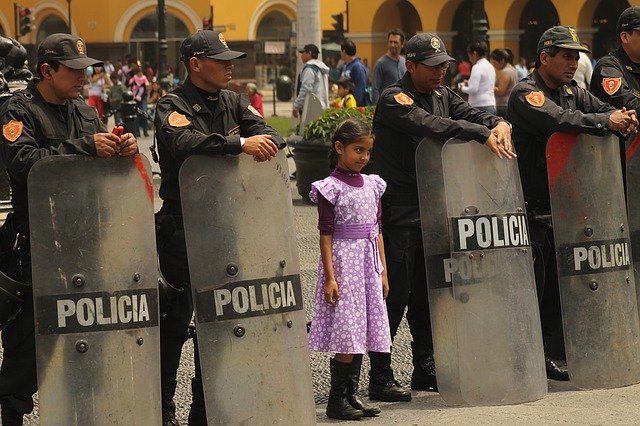
I run into the same handful of excuses constantly. You've probably said one of them yourself, or heard a friend say it:
"That's what the police are for."
"Crime doesn't really happen around here."
"I can talk my way out of pretty much anything."
"I'll just see the red mist and go primal if it comes to that."
Here's the uncomfortable truth: I have met people who said exactly these things, who later became victims of violence. Not hypothetically, actually. The confidence didn't protect them. It just meant they walked into the situation with zero preparation and a false sense of security.
Let's take these one at a time.
"That's what the police are for." Police respond to crime. They don't prevent the one happening to you right now, in the thirty seconds it takes to unfold in a parking lot, a hotel hallway, or your own front porch. By the time anyone calls 911, the moment that mattered is already over.
"I can talk my way out of it." I love this one, because I can test it on the spot. I've told people: "I'll give you $100 if you can talk your way out of me punching you in the face one minute from now."
Nobody has ever taken that bet. Not one person. Because deep down, everyone knows that verbal de-escalation only works on people who are willing to be de-escalated, and a percentage of attackers simply aren't.
"Crime doesn't happen here." Crime happens everywhere. It happens in nice neighborhoods, nice restaurants, nice parking lots. The people who think their zip code protects them are often the easiest targets, because they're the least prepared.
"I'll see the red mist and go primal." Adrenaline doesn't make you more capable, rather it makes you faster, stronger, and dumber, all at the same time. Without training, that "primal" response usually means freezing, flailing, or turning your back at exactly the wrong moment. The body does what it's been trained to do, not what you hope it'll do.
What Actually Reshaped My Thinkng About Self Defense
Here's something that might surprise you. When I went through bodyguard training school, learning and preparing to protect people whose lives genuinely depended on it, the curriculum barely touched on fighting.
Instead, it was almost entirely about:
Avoidance: recognizing and steering clear of dangerous situations before they develop
Awareness: reading environments, people, and patterns so threats don't catch you by surprise
Threat analysis: understanding what kind of danger you're actually facing, and how it's likely to play out
I remember sitting there thinking: why did nobody teach me any of this in any martial art I've ever studied? I had black belts. I'd competed as a boxer. And yet none of that training had prepared me for the actual skill that keeps people safe in the real world, which is mostly about never being in the fight in the first place.
That realization changed how I teach. If a self-defense program spends 90% of its time on punches, kicks, and locks, and barely mentions awareness, avoidance, de-escalation, or the law, it's not really a self-defense program. It's a martial arts program wearing a self-defense costume.
So, Should You Learn Self-Defense?
Yes. Almost everyone should. Not because the world is more dangerous than it's ever been, but because most people are walking around with zero tools for the moment things go wrong, and that moment doesn't ask permission or give you a warning.
But "yes" comes with a condition: learn the right version of it.
How To Choose Self-Defense Training That Won't Waste Your Time or Money
This is where most people go wrong, and it's almost where all the bad reputation about self-defense comes from. Here's how to avoid that.
Do Your Research First:
Don't just walk into the nearest gym because it's close to your house. Spend time understanding what self-defense actually means versus what martial arts offer. If you watched my video on the difference, you already have a framework for evaluating what you're being offered.
Interview the Instructor Like You're Hiring Them, Because You Are
Before you sign up anywhere, ask the instructor these questions directly:
• What are the legal ramifications of the techniques you teach me?
• How do you teach mindset and managing fear or adrenaline?
• What will you teach me about situational awareness?
• How do you address things like road rage or confrontations outside of a "fight" scenario?
Listen Carefully to the Answers
A good instructor will have thoughtful, specific answers to all four of those questions. They'll talk about use-of-force law, training your nervous system to function under stress, about scanning environments and reading people, and about real situations like road rage that have nothing to do with a dojo.
A bad instructor will either dodge the questions, get defensive, or just go straight back to "Well, we teach really effective kicks and punches." That's your sign to politely walk away.
The Bottom Line
Should you learn self-defense? Yes. Not because you need to become a fighter, and not because danger is lurking around every corner. But because awareness, avoidance, and a handful of well-chosen physical tools are skills that cost you a little time and money now, and can save you everything later.
The people I've met who got hurt weren't unlucky because they lacked toughness. They got hurt because they had a plan that sounded good in conversation, like "I'll talk my way out of it," "that's what the police are for," but had never been tested against reality.
Don't let "I can handle it" be a theory you've never actually checked. Find training that teaches the whole picture, awareness, avoidance, de-escalation, the law, and yes, some physical technique, and you'll walk through the world differently. Not paranoid. Just prepared.

FOLLOW US


18339 Old Statesville Rd, Unit i
Cornelius, NC 28031
COMPANY
CUSTOMER CARE
ADMIN
GET FIT
HAVE FUN
LEARN SELF-DEFENSE
Copyright 2026. Krav Maga LKN. All Rights Reserved. Tel: 704-299-0681